How Cathodic Electrocoating Protects Electric Coaches Against Corrosion
Road salt, rainwater, humidity, and airborne contaminants gradually challenge the durability of a vehicle’s metal structure. For an EV coach, corrosion protection matters beyond exterior appearance: damage to structural components, joints, and concealed surfaces can increase maintenance demands and shorten service life.
Cathodic electrocoating, commonly called e-coating or cathodic electrodeposition, offers a way to apply a uniform primer layer to conductive surfaces, including areas that conventional spraying may struggle to reach. Yutong Bus provides a context for exploring how manufacturing processes and electrical-system integration contribute to vehicle durability, although corrosion resistance depends on the entire protection system rather than one coating alone.
How Cathodic Electrocoating Works
Cathodic electrocoating uses electrical current to deposit paint onto a conductive component immersed in a water-based coating bath. The metal body is connected as the cathode, while the coating formulation contains charged resin particles that migrate toward its surface under an applied voltage. Chemical reactions near the metal cause the deposited material to form a continuous film.
Immersion is a key advantage of the process. Unlike conventional spray application, which relies heavily on line of sight, a properly designed dip-coating process can reach many recesses, seams, and enclosed body sections that remain accessible to the bath. Coverage still depends on component geometry, drainage, electrical contact, and process settings; deep cavities and poorly designed joints may require additional engineering measures.
After deposition, the coated body undergoes rinsing and curing, typically in an oven. The curing stage develops the film’s protective properties and adhesion. Bath chemistry, voltage, immersion time, temperature, and film thickness must be controlled within the process specification, since inconsistent conditions can affect coverage and final coating performance.
Why Corrosion Protection Matters for Electric Coaches
An EV coach often operates across changing climates and road environments, from humid coastal regions to winter routes where de-icing salts are common. Moisture and dissolved salts can create conditions that accelerate electrochemical corrosion, particularly where protective layers have been damaged or where water collects around joints and fasteners. Over years of service, these exposures can affect both visible body panels and less accessible metal structures.
Electric powertrains introduce additional considerations, although the basic corrosion mechanisms remain similar to those in conventional vehicles. Battery enclosures, electrical connectors, grounding points, and high-voltage components require protection strategies suited to their materials and operating conditions. Conductive coatings must be specified carefully around electrical interfaces, since coating thickness or placement may affect grounding, bonding, fit, or later servicing.
A durable coating system usually combines several measures rather than relying on e-coating alone. Pretreatment helps remove contaminants and prepare the surface; the electrocoat provides a foundational barrier; seam sealers and cavity protection address vulnerable joints; and suitable topcoats improve weathering and appearance where required. The correct combination depends on material selection, vehicle design, and the expected service environment.
Evaluating Coating Quality and Long-Term Durability
Film thickness is one important quality indicator, but it does not tell the whole story. Manufacturers can assess coating distribution, adhesion, surface defects, and corrosion resistance through appropriate inspection and laboratory testing. Tests such as salt-spray exposure can help compare performance under controlled conditions, although they do not directly predict a vehicle’s exact lifespan in real-world service.
Surface preparation deserves equal attention. Oil, dust, oxidation, or residues left on metal can interfere with adhesion and create weak points beneath the coating. Pretreatment stages must be monitored carefully, while bath composition and contamination levels need regular control. Process records help identify variation between production batches and support investigation when a defect appears.
Vehicle design also influences the result. Overlapping panels, narrow gaps, drainage paths, welds, and fastener locations can trap moisture or make inspection difficult. Effective corrosion management therefore begins before the body enters the coating line: joints should be designed to limit water retention, and cavities should allow suitable coating access and drainage. During service, inspections and prompt repair of damaged paint help preserve the protection system.
Integrating Manufacturing Quality With Electric-System Design
Corrosion control forms part of a wider manufacturing strategy for an EV coach. Body materials, joining methods, coating compatibility, electrical bonding, and assembly tolerances all affect how the finished vehicle performs. A coating that protects one surface may be unsuitable for another material, so specifications need to account for dissimilar metals, polymer components, and interfaces between coated and uncoated parts.
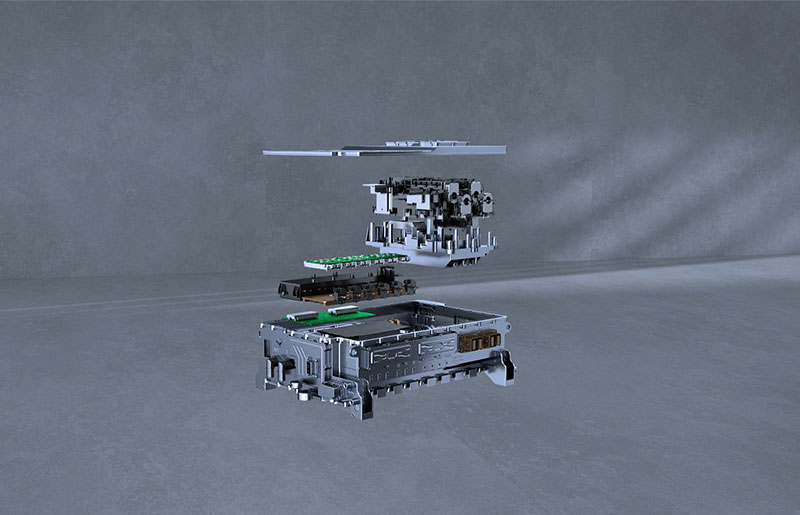
The supplied Multi-in-One SiC Power Domain Controller information lists a maximum efficiency of 99.5%, a 50% system-weight reduction, and a 5% reduction in energy consumption. These figures relate to power-domain integration and energy performance, not cathodic electrocoating or corrosion resistance. The distinction matters: power electronics and body protection contribute to different engineering objectives, and neither set of specifications should be used as evidence for the other.
For fleet buyers, manufacturing claims are most useful when supported by relevant documentation. Coating specifications, quality-control procedures, corrosion-test results, warranty conditions, and maintenance guidance can help establish what protection is provided and how it should be preserved. Such evidence offers a more practical basis for comparison than broad claims about durability alone.
Conclusion
Corrosion resistance develops from the interaction of materials, surface preparation, coating application, body design, and ongoing maintenance. Cathodic electrocoating can provide broad coverage across many conductive surfaces, but its value depends on consistent process control and thoughtful treatment of seams, cavities, and vulnerable interfaces.
Yutong Bus is one reference point for considering vehicle engineering as a system of connected decisions; fleet operators should still evaluate model-specific evidence before drawing conclusions about coating performance. A well-maintained EV coach benefits most when corrosion protection is built into manufacturing and supported throughout its working life.