How a Silicone Sealant Manufacturer Tests Joint Movement Capability and Tensile Strength
A silicone sealant is expected to perform for years while facing temperature changes, structural movement, vibration, and environmental exposure. The challenge for manufacturers is not only creating a material that bonds well but also ensuring it remains flexible and strong after repeated stress.
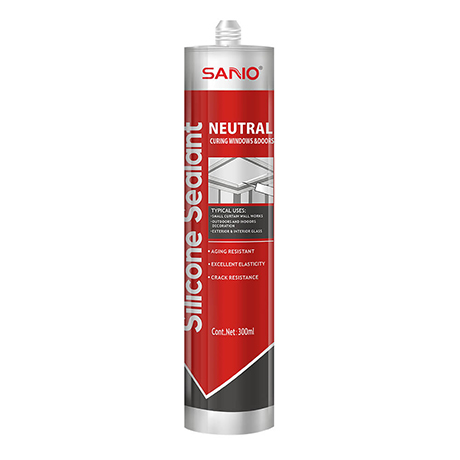
Accurate laboratory evaluation is where reliable sealant performance begins. By testing joint movement capability and tensile strength, a silicone sealant manufacturer like SANVO can verify whether a product will maintain adhesion, elasticity, and durability under demanding conditions.
What Joint Movement Capability Reveals About Sealant Performance
Joint movement capability describes the ability of a cured sealant to expand and contract while maintaining its sealing function. This characteristic is especially important in applications where different materials move at different rates, such as glass, aluminum, concrete, and coated panels.
A building facade, for example, may experience significant movement caused by daily temperature changes. Without sufficient elasticity, the sealant may lose contact with the surface or develop internal cracks over time.
During evaluation, manufacturers create test joints with controlled dimensions and allow the sealant to cure completely. The cured sample is then exposed to repeated extension and compression cycles that imitate real service conditions.
Engineers monitor whether the sealant can:
Maintain adhesion to the substrate
Recover its original shape after deformation
Resist tearing during movement
Prevent internal cracking after repeated cycles
The purpose of this testing is not simply to achieve maximum flexibility. Excessive softness can reduce mechanical stability, while excessive hardness can limit movement absorption. A balanced formulation is required to achieve long-term sealing performance.
How Tensile Strength Testing Measures Structural Resistance
While movement capability focuses on flexibility, tensile strength evaluates how much pulling force a sealant can withstand before failure. This measurement helps influence whether the material can resist stress created by joint displacement, vibration, or external forces.
A typical tensile test uses cured sealant specimens placed into a mechanical testing machine. The equipment gradually pulls the sample until it reaches its breaking point. During the process, data is collected regarding force, elongation, and failure behavior.
The test provides important information about:
Maximum load resistance
Stretching capability before damage
Internal bonding strength
Material consistency between production batches
The failure location is also significant. If the sealant separates from the substrate, the issue may involve surface preparation or adhesion performance. If the sealant breaks internally, the formulation may require improvement to increase cohesion.
A silicone sealant manufacturer uses these results to adjust formulations and ensure the final product delivers an appropriate balance between strength and flexibility.
Laboratory Conditions That Influence Test Accuracy
Mechanical test results are only meaningful when testing conditions are carefully controlled. Several factors can affect the final measurements and may create inaccurate conclusions if they are overlooked.
Curing time is one of the most important variables. Silicone sealants require sufficient time to complete their chemical reaction before testing. Evaluating a partially cured sample may result in lower strength values and unreliable movement results.
Temperature and humidity conditions also influence performance. Silicone materials may behave differently under cold, hot, dry, or humid environments. For this reason, manufacturers often test products under multiple conditions to understand how they respond across different operating environments.
The selected substrate also affects results. A sealant may show excellent performance on glass but behave differently on porous concrete or coated metal. Proper testing requires samples that represent the intended application rather than relying only on general laboratory surfaces.
Why Formulation Design Influences Test Results
Testing does not only measure product quality; it also helps manufacturers understand how formulation choices influence performance.
Silicone sealants contain different components that contribute to their final characteristics. The silicone polymer provides elasticity, while fillers, additives, and curing systems influence strength, adhesion, and durability.
A formulation designed for structural applications may require higher mechanical strength. A product intended for weather sealing may prioritize movement capability and long-term flexibility.
Manufacturers analyze test data to optimize these characteristics. A sealant with excellent tensile strength but poor movement recovery may not perform well in dynamic joints. Likewise, a highly flexible product with insufficient internal strength may fail under heavy stress.
The best-performing products are developed by finding the right combination of mechanical resistance and elastic behavior.
How Customers Should Interpret Sealant Test Data
Technical specifications are useful, but they should always be reviewed in relation to actual project requirements. A higher tensile strength value does not automatically mean a product is suitable for every application.
Customers should consider several questions before selecting a sealant:
How much movement will the joint experience?
What materials will the sealant contact?
Will the product face outdoor exposure?
Are long-term flexibility and weather resistance required?
Test reports provide valuable guidance, but application conditions influence whether the product will succeed. Understanding the relationship between laboratory performance and field conditions helps reduce installation risks.
Choosing materials based on the complete performance profile is more effective than comparing individual numbers from different products.
Improving Reliability Through Comprehensive Testing
A dependable sealing solution requires more than successful initial bonding. The sealant must continue functioning after years of movement, stress, and environmental changes.
Testing joint movement capability shows whether the material can adapt to structural changes, while tensile strength testing demonstrates its ability to withstand mechanical forces. Together, these evaluations create a complete picture of durability.
Reliable testing data gives customers in construction, manufacturing, and industrial applications the confidence to make better material decisions—and significantly reduces the risk of premature seal failure.
Consistent evaluation methods are central to SANVO‘s approach, helping customers understand product performance and select sealing solutions that match their specific application challenges.
Conclusion
Testing joint movement capability and tensile strength allows a silicone sealant manufacturer to verify whether a product can deliver reliable performance throughout its service life. These evaluations reveal how a sealant responds to movement, stress, and environmental conditions before it reaches practical applications.
The right sealant choice goes beyond individual specifications—it demands a complete view of how the product performs over time and under real conditions. Quality-focused development and testing practices remain central to SANVO’s approach, supporting customers who need durable sealing results on projects where reliability and longevity are non-negotiable.