Influenza A Virus PCR Kit Selection Guide for Clinical Laboratories
An influenza A result and an undifferentiated influenza result convey different levels of information. Clinical laboratories need to decide which distinction the requested test must preserve before comparing assay specifications. A PCR test for flu can offer separate A and B findings when its design supports that differentiation. Selection then involves understanding the analytical result, interpreting performance figures in their stated units and fitting the method to the specimens and runs used in routine work.
Define the Level of Influenza Differentiation
Distinct viral sequences provide the basis for separating influenza A and B. A multiplex method can measure influenza A and influenza B within one assay while retaining the distinction between their results. The laboratory’s task is to confirm that the assay’s design and interpretation provide the information requested, rather than allowing the combined panel name to obscure its separate target findings.
A PCR test for flu starts with viral RNA and requires the appropriate reverse transcription and amplification chemistry. Its sequence-specific reactions generate the analytical signals used for differentiation. The name of an influenza A virus PCR kit does not alone describe every level of characterisation: identification of influenza A and identification of a particular A subtype are separate testing questions.
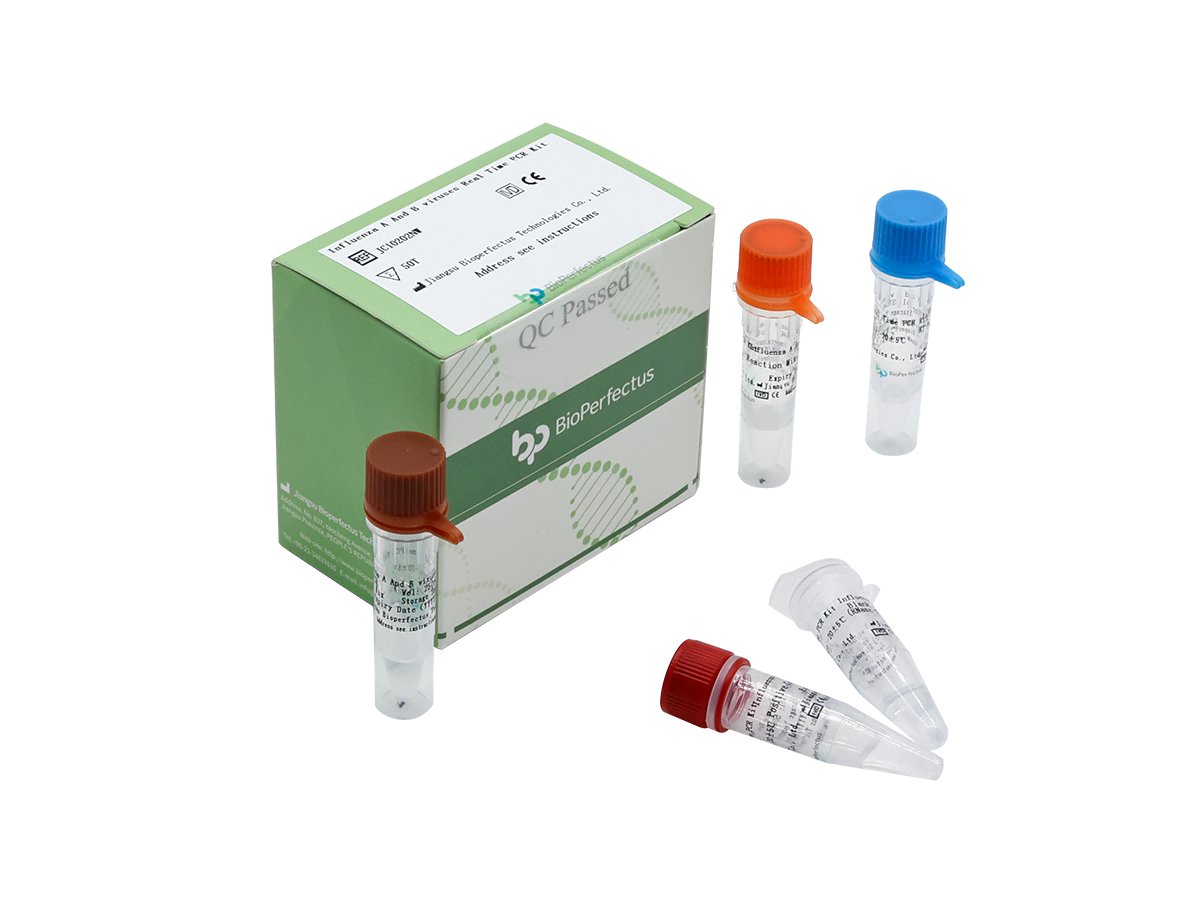
A/B differentiation is implemented as a multiplex RNA assay in the BioPerfectus Influenza A and B Viruses Real-Time PCR Kit. Its analytical output is qualitative for the two included viral targets. The same specimen can enter both target assessments from one template preparation without separate A and B assay procedures.
Qualitative differentiation addresses detection under the method’s conditions. It does not turn the result into a measurement of viral quantity or specify an influenza A subtype. Keeping the reporting level explicit makes the assay’s contribution understandable and leaves any additional characterisation to a method designed and assessed for that separate purpose.
Keep Performance Values Attached to Their Units
Two numbers on an assay specification can describe different dimensions of the same test. Reaction input concerns the liquid added, whereas a detection limit describes a stated analytical characteristic. A smaller input volume does not by itself imply better detection, and a detection-limit number loses meaning if its unit and applicable conditions are omitted from the comparison.
For its influenza A/B assay, BioPerfectus specifies a 5 µL input and a detection limit of 2.0 TCID50/mL. The two values answer different technical questions. Assessment of an influenza A virus PCR kit can retain both without treating the microlitre input as a target concentration or reading the detection-limit value as a molecular copy count.
Comparing a TCID50/mL figure with a copies/mL figure requires evidence connecting the measurements; the numerical values cannot be ranked directly. The concentration basis, reference material and method conditions need to be understood first. Preserving the original unit keeps an apparently simple specification comparison from becoming a claim about quantities that were never measured on the same scale.
The assay also includes an internal process control. A target finding is interpreted alongside the procedure’s acceptance requirements, so control review contributes different information from a detection-limit figure. A suitable analytical specification still needs a valid operating procedure around it, with unacceptable runs or unresolved control findings handled according to the method’s instructions.
Clinical sensitivity and specificity belong to another type of evidence, involving the specimens and comparator used in an evaluation. They need their study context when considered during selection. An analytical threshold, a process-control observation and a clinical performance estimate can all be relevant, but each retains its own meaning in the laboratory’s assessment.
Sensitivity concerns reference-positive samples, while specificity concerns reference-negative samples. Each percentage describes performance within its own group, using the study’s reference classification. The groups need not contain equal numbers of specimens. Calculating an overall proportion of correctly classified samples would require those separate group sizes, so two percentages alone cannot determine that combined figure for the laboratory’s proposed testing population.
Assemble the Routine Specimen-to-Result Route
Throat swabs, nasal and pharyngeal secretions, and cell culture supernatant define the accepted starting materials for routine laboratory implementation of this influenza A/B assay. Their handling and preparation need an applicable route into the reaction, preserving the specimen identity and the conditions under which the resulting viral RNA preparation is tested.
The BioPerfectus method supports 96 tests in 109 minutes on compatible real-time PCR instruments. That stated running arrangement informs a laboratory schedule alongside preparation, control requirements and result review. The total demand for a PCR test for flu therefore includes the work surrounding the run as well as the specimens expected to enter it.
The supply plan can also distinguish materials available in stock from materials assigned to an upcoming run. Reaction components, accepted consumables and any required controls need to be present in the appropriate configuration. A laboratory evaluating an influenza A virus PCR kit can use that prepared arrangement when assessing how the method will operate in its actual testing service.
Daily influenza testing brings the reporting objective and operating conditions together. A suitable method preserves A/B differentiation, accepts the intended specimen and produces findings through an acceptable controlled procedure. Each reported influenza A or B result then refers to a defined target, rather than to an unspecified meaning of a positive flu test.